
Bose A30
4.6Editor score
Three adjustable noise modes
Tool-free side-swappable microphone
Bluetooth audio prioritization
FAA and EASA certification
Our Aviation Headset guide compares 10 leading headsets for noise control, comfort, communication, connectivity, durability, and aircraft compatibility.
An aviation headset must do more than make radio calls audible. It must help pilots understand transmissions, reduce distracting cockpit noise, work reliably with the aircraft, and remain comfortable through long flights. The right model balances active or passive noise control, microphone performance, fit, connectivity, and durability.
This guide compares ten aviation headsets across those practical priorities, using the supplied specifications and customer ratings. It includes active noise reduction and passive noise reduction models, wired and Bluetooth-equipped options, lightweight in-ear designs, and full-size circumaural headsets for different aircraft and pilot needs.
Each selection highlights its strongest qualities as well as the compromises that may matter to a particular buyer. The top three picks represent an editor's choice, a premium option, and a budget-oriented choice. Product availability and pricing can change, so confirm current details before purchasing.
4.6Editor score

4.6Editor score

4.5Editor score
The comparison below places every headset side by side, emphasizing the differences that matter in the cockpit: noise-control technology, physical design, microphone arrangement, audio functions, connectivity, and aviation-specific durability.




The Bose A30 combines a full-size circumaural fit with adjustable active noise reduction, Bluetooth audio, and a microphone designed for aircraft communication systems. Its 4.6 rating reflects a favorable balance of comfort, noise control, and useful features. The headset also offers a compelling set of specifications for pilots who want a modern full-size design rather than a minimal in-ear model.
We may earn a commission when you buy through this link, at no additional cost to you.
Comfort receives particular attention in the supplied design information. Bose describes a lightweight full-sized headset, soft ear seals, and clamping force that is 20 percent lower than on the A20. Three selectable active noise-cancellation modes let the wearer adapt the headset to different preferences and operating environments. Active equalization is intended to shape incoming signals for clarity, while the aircraft-oriented microphone is engineered to improve clarity against background noise.
Convenience and flexibility are additional strengths. The removable down cable and boom microphone can be mounted on either side without tools, making the A30 more adaptable to different wearing preferences and cockpit arrangements. Bluetooth can connect to mobile devices, audio systems, and electronic flight bags, while audio prioritization can mute or mix that stream with intercom audio. The trade-off is that this remains a dual-plug aviation headset, and Bluetooth is an added audio function rather than a replacement for the aircraft connection.
The A30 is a strong recommendation for pilots who prioritize all-around capability: effective ANR, a full-size fit, flexible microphone placement, and modern wireless audio. It is particularly attractive to users who fly in varied environments and want more than one noise-control setting. Those who only need basic passive protection and simpler controls may find one of the less elaborate headsets easier to manage, but for a premium general-purpose aviation headset, the Bose A30 is the strongest all-around choice here.
The lightweight circumaural structure, softer clamping force, and cushioned ear seals are designed to reduce fatigue while preserving a stable seal. Three ANR modes provide additional control over how aggressively background noise is suppressed.
The tool-free, side-swappable boom and down cable make it easier to configure the headset around a preferred side. Bluetooth audio prioritization adds phone and app audio without removing the dual-plug aviation connection.
We may earn a commission when you buy through this link, at no additional cost to you.
The Rugged. Air RA200 is aimed directly at student pilots and flight schools, and it offers a focused set of practical features. Its 4.6 rating matches the Bose A30 among the highest-rated products in this comparison. A 24 dB noise reduction rating, an electret noise-canceling microphone, and individual volume controls cover the core functions expected from an entry-level aviation headset.
We may earn a commission when you buy through this link, at no additional cost to you.
Its most notable strength is straightforward performance without an advanced electronics package. The lightweight design weighs only 16 ounces with the pair of headsets, while soft foam ear seals are intended to support extended use. Ultra-light neodymium speakers, separate controls for each ear, and a 3.5 mm audio input for phone connectivity add practical flexibility. The included custom padded bag helps protect the equipment while it is not in use.
The main limitation is the lack of active noise reduction. In louder aircraft, passive attenuation may not be enough for pilots who want stronger suppression of low-frequency engine and aerodynamic noise. There is also no documented Bluetooth functionality, so modern device integration is more limited than it is with several higher-ranked models. The microphone arrangement is traditional rather than featuring a side-swappable or digital communication system.
This is a compelling selection for student pilots, instructors, and flight schools that want a proven full-size headset without paying for ANR or wireless features. It may also suit experienced pilots who prefer passive noise reduction and straightforward analog controls. The RA200 is not the most technologically advanced option, but its strong rating, light weight, comfortable seals, and included storage case make it a sensible budget-oriented aviation headset.
The RA200 concentrates on passive protection, intelligible microphone communication, and accessible controls. That simplicity makes it easy for new pilots to learn and use while still supporting regular flight training.
At 16 ounces for the pair, with soft foam ear seals, the headset is designed to reduce unnecessary burden during lessons and repeated flights. The padded storage bag also helps preserve the headset between sessions.
We may earn a commission when you buy through this link, at no additional cost to you.
The KORE KA-1 is a full-featured passive general aviation headset with a 4.4 customer rating. It focuses on comfort, audio flexibility, and dependable communication rather than active electronics. Its 24 dB noise reduction rating, stereo output, electret noise-canceling microphone, and individual ear volume controls make it a versatile choice for conventional aviation listening.
We may earn a commission when you buy through this link, at no additional cost to you.
Comfort is the central selling point. Ultra-plush silicone gel ear seals are replaceable, while an extra-thick head pad and adjustable headband are designed for long flights. The microphone uses a 360-degree flex boom, allowing the user to position it accurately while helping it remain stable. Independent volume controls, clear-hear speakers, a mono/stereo switch, and a 3.5 mm AUX input broaden the ways the headset can be used.
A notable modern benefit is the ability to connect apps such as ForeFlight through the auxiliary input for navigation cues, alerts, and in-flight updates. This does not make the KA-1 a Bluetooth headset, but it can still add useful information without replacing the aircraft connection. Its limitation is the absence of ANR, while the 4.4 rating is slightly lower than those of several alternatives. Buyers who want stronger cancellation in very noisy aircraft should consider an active model.
The KA-1 is an excellent match for general aviation pilots who value a comfortable, serviceable headset and want mobile navigation information in the cockpit. Replaceable seals, a padded carrying bag, and broad audio controls make it especially practical for frequent use. It is a particularly strong option for pilots who prioritize passive noise reduction, comfort, and app-assisted navigation over wireless connectivity.
Replaceable silicone gel ear seals and a thick padded headband support long-duration comfort while giving owners a way to renew worn cushioning. The adjustable design also helps create a stable, personal fit.
Independent volume controls, mono/stereo switching, and a 3.5 mm input make the headset adaptable to different aircraft and audio sources. The AUX connection can also carry navigation alerts from compatible mobile apps.
We may earn a commission when you buy through this link, at no additional cost to you.
The Lightspeed Sierra ANR blends active noise reduction with Bluetooth connectivity and a 4.6 rating. It is designed for pilots who want a conventional over-ear headset with the convenience of connecting personal devices and an integrated control box. Its specification also emphasizes durability, long-term construction, and features developed with input from pilots.
We may earn a commission when you buy through this link, at no additional cost to you.
The Sierra's physical design centers on comfort. It uses over-ear headphones, reversible headband and microphone positioning, and ear seals intended to create a better seal and distribute side pressure more evenly. That flexibility can help users find a comfortable arrangement rather than accepting a fixed left- or right-side setup. Active noise reduction addresses persistent cockpit noise, while Bluetooth expands access to phones, music, and other audio.
The integrated control box includes an auxiliary input and manages the connection process. During radio or intercom transmissions, auxiliary audio is automatically lowered, and a soft-mute function restores music gradually afterward. The associated app can capture incoming and outgoing communications, although that feature introduces another piece of software and setup to consider. The headset still relies on its aviation connection for radio communication.
Pilots seeking an established combination of active cancellation, flexible fit, and wireless audio should give the Sierra close attention. It is particularly useful for those who regularly listen to mobile audio or want access to communication recording features. Those who prefer fewer controls, fewer accessories, or a less complex setup may prefer an analog headset, but the Sierra earns its place for its broad feature set.
The reversible headband and microphone design allow the wearer to reposition the headset around personal preferences. A better seal and more even distribution of side pressure support sustained comfort.
Bluetooth connectivity and the integrated control box make personal audio easier to manage. Auxiliary sound lowers during radio or intercom traffic and returns smoothly afterward.
We may earn a commission when you buy through this link, at no additional cost to you.
The David Clark H10-13.4 earns the highest listed rating in this guide at 4.7 and stands out for its focused approach to comfort and communication. It is a premium conventional aviation headset without documented active noise reduction or Bluetooth. Instead, it concentrates on cushioning, microphone positioning, and precise analog controls.
We may earn a commission when you buy through this link, at no additional cost to you.
Its comfort details begin with a super-soft, double-foam head pad and new undercut comfort gel ear seals. A universal flex boom allows the microphone to be positioned for the pilot's preferred geometry, while the M-7A noise-canceling microphone is intended to improve transmission clarity. A low-profile volume knob with detent settings provides clear, tactile adjustment without adding digital menus.
The five-year guarantee provides meaningful reassurance for a headset intended for regular aviation use. However, buyers should not mistake its premium status for a full suite of modern electronic features. There is no documented ANR, Bluetooth connection, auxiliary audio prioritization, or mobile-app integration. Pilots who fly in particularly noisy aircraft or routinely consume phone audio may prefer one of the active models.
The H10-13.4 is an excellent choice for pilots who prioritize physical comfort, microphone quality, and durable straightforward controls. It is especially appealing to those who do not need wireless connectivity or app features. The high customer rating, flexible boom, gel seals, and long guarantee justify consideration, particularly when the goal is a dependable premium headset rather than a technology-heavy package.
The double-foam head pad and undercut gel ear seals focus on cushioning at common pressure points. These details can matter greatly during extended flights or repeated training sessions.
The universal flex boom helps place the M-7A microphone accurately, while the detented volume knob makes incremental changes easy. The design keeps essential functions direct and tactile.
We may earn a commission when you buy through this link, at no additional cost to you.
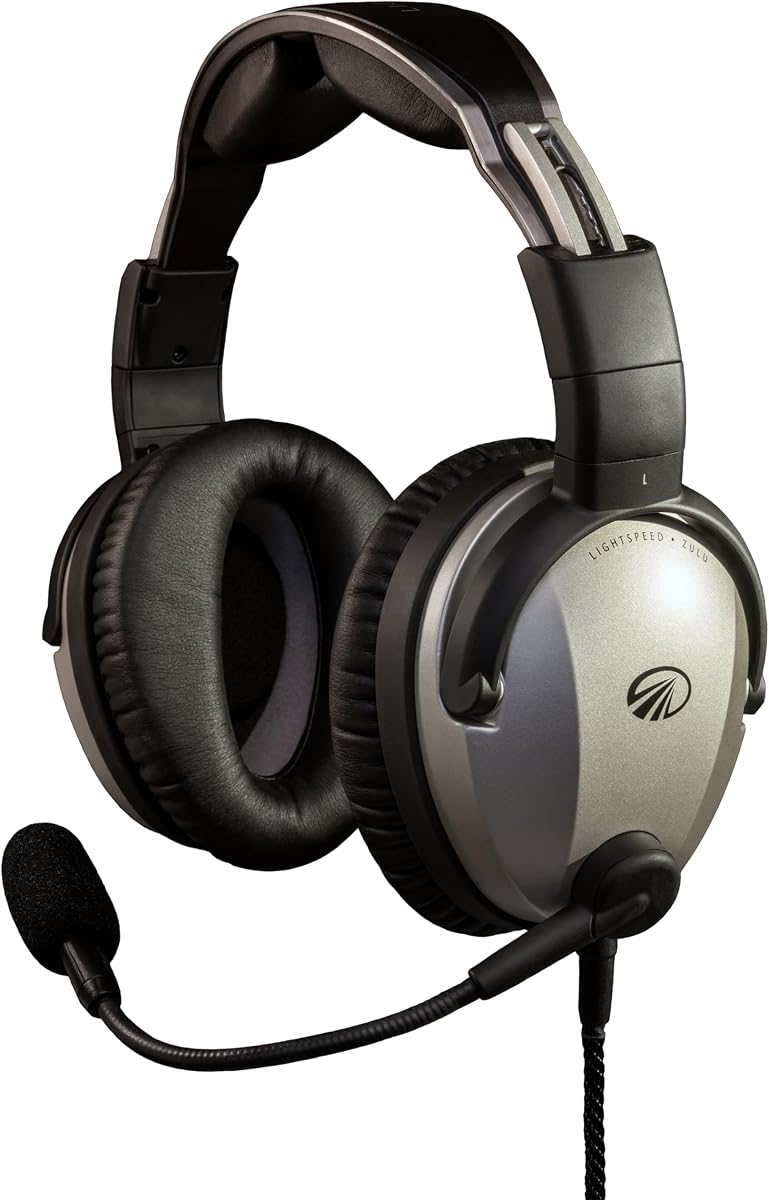
The LIGHTSPEED Zulu 3 pairs a 4.7 rating with advanced active noise reduction, Bluetooth, and a notably light construction. It targets pilots who want effective quiet, reliable communication, and modern device integration. The specification emphasizes both low-frequency active reduction and the ear cups' ability to block higher-frequency noise.
We may earn a commission when you buy through this link, at no additional cost to you.
At 14.6 ounces including ear seals and the microphone boom, the Zulu 3 places a light load on the head. A low-profile stainless-steel headband follows the head's curve to distribute weight and side pressure more evenly. The body is built largely from stainless steel and magnesium, while the cables use a Kevlar core. Together, these details present a rugged design intended to withstand demanding flying environments.
ComPriority automatically reduces auxiliary-device audio during radio or intercom transmissions and then restores it gradually. FlightLink, available through the supplied patch cable and a free app for compatible Apple mobile devices, can capture incoming and outgoing communications. These features are useful for training and post-flight review, but they also require compatible hardware, software, and a deliberate setup process.
The Zulu 3 is a strong option for pilots who want a proven balance of active cancellation, low weight, and useful connected features. It suits those who regularly use music, navigation apps, or communication recording in the cockpit. Compared with the newer Zulu 4, it offers a single-Bluetooth architecture and lacks the newest dual-device capability and FrameFit seals, but it remains a highly rated, durable premium headset.
Advanced ANR targets a deep range of low-frequency cockpit noise, while magnesium ear cups add passive high-frequency blocking. The low-profile headband helps distribute the headset's modest weight comfortably.
Stainless steel, magnesium, and Kevlar-core cables form a durable construction intended for years of regular use. That ruggedness makes the Zulu 3 appealing for pilots who view a headset as long-term cockpit equipment.
We may earn a commission when you buy through this link, at no additional cost to you.
The Bose Proflight Series 2 is the lightest full product in the comparison by a substantial margin. With a 4.3 rating, it trades some of the bulk and isolation associated with circumaural headsets for an exceptionally light 4.5-ounce design. Digital active noise cancellation and Bluetooth connectivity make it a modern option for pilots who prioritize low on-head weight.
We may earn a commission when you buy through this link, at no additional cost to you.
The headset is engineered for pilots of moderately noisy, pressurized turbine-powered aircraft. Its thinner, lighter, and more flexible cable reduces the sense of tethering, while the updated tap control provides a way to activate talk-through communication. The microphone is designed for straightforward adjustment. Together, these features support usability without requiring the wearer to manage a large control module.
Fit is the central compromise. The supplied product note specifically warns that incorrect earbud-tip sizing or improper placement can impair sound quality and call performance. In-ear headsets also generally provide less passive isolation than full-size ear cups, which may matter in louder cockpits or for pilots who prefer a stable over-ear seal. The 4.3 rating is lower than the ratings of most products in this guide.
The Proflight Series 2 is best for pilots who want active noise reduction and wireless features in the lightest available package. It may be particularly attractive during long flights, provided the user finds stable in-ear tips and achieves a proper seal. Those who prefer greater passive isolation, replaceable full-size cushions, or a more substantial headset should compare the light in-ear design with the Bose A30 or another circumaural option.
The 4.5-ounce on-head weight reduces the physical burden associated with larger aviation headsets. A thinner flexible cable further supports freedom of movement and easier storage.
Digital active noise cancellation helps pilots lower radio volume to an appropriate level while keeping important cockpit sounds manageable. The result combines active control with the portability of an in-ear format.
We may earn a commission when you buy through this link, at no additional cost to you.
The AIRVOICE Pilot Headset is designed around flight-school students and has a 4.5 rating. It provides a generous list of physical and communication features for a headset centered on passive noise reduction. Up to 25 dB of noise attenuation, a noise-canceling electret microphone, and ultra-lightweight neodymium speakers establish a useful baseline for instruction and general aviation.
We may earn a commission when you buy through this link, at no additional cost to you.
Its microphone boom has an adjustment range exceeding 300 degrees, allowing the user to move it to either side while keeping it securely positioned. The output uses a mono configuration and includes a 3.5 mm input for auxiliary audio. Artificial-leather cushions over silicone gel are intended to remain comfortable against the skin, while a metal headband with a high-gloss coating adds corrosion resistance.
As a passive-noise-reduction headset, it does not provide the consistent low-frequency suppression associated with electronic ANR. Its mono-only audio may also offer less spatial separation than a stereo-capable model. On the other hand, the simple controls and straightforward layout can be easier for a student to understand. The broad boom adjustment also makes it flexible for different users and seating positions.
The AIRVOICE is a strong choice for beginning pilots who need a comfortable, durable headset with clear microphone specifications and useful passive attenuation. It is particularly suitable for flight-school use where learners want essential functions without unnecessary wireless or app complexity. Those who routinely fly in louder aircraft or prefer stereo should examine the KORE KA-1 or an active-noise-reduction alternative.
The stated reduction of up to 25 dB helps reduce ambient cockpit noise without electronic cancellation. This can provide a quieter learning environment while keeping the controls approachable.
The boom rotates through a range exceeding 300 degrees, allowing comfortable positioning on either side. That adjustability helps support a secure microphone placement for different students.
We may earn a commission when you buy through this link, at no additional cost to you.
The ASA AirClassics HS-1A combines a 4.7 rating with an emphasis on durability, universal aircraft compatibility, and long-term ownership. It offers 23 dB of passive noise reduction, a noise-canceling flexible-boom microphone, and both stereo and mono operation. That combination makes it a credible core headset for pilots who regularly move among different aircraft.
We may earn a commission when you buy through this link, at no additional cost to you.
The construction details are particularly notable. Multi-strand wiring and corrosion-resistant gold-plated connectors are designed to withstand frequent use and changing cockpit environments. An adjustable headband uses thumb screws to create a personalized fit, including when the pilot wears glasses or a hat. High-density foam ear cups provide passive attenuation and cushioning for extended wear.
Dual volume controls allow independent left and right adjustment, which is useful with stereo sources and can reduce the need to readjust the headset after changing audio settings. ASA supports the product with a lifetime warranty for the original owner covering defects in materials and workmanship. The limitation is that the headset offers passive rather than active noise cancellation, and there is no documented Bluetooth integration.
The HS-1A is an excellent recommendation for pilots who switch among aircraft and want a durable, serviceable headset with a long warranty. It suits flight students, instructors, and general aviation pilots who need reliable communication, broad audio-panel compatibility, and personalized volume control. Pilots who need stronger suppression of low-frequency noise should compare it with an ANR model.
Multi-strand wiring and gold-plated corrosion-resistant connectors support repeated use across different aircraft. Broad audio-panel compatibility reduces the need to own a separate headset for every cockpit.
Thumb-screw headband adjustment accommodates glasses, hats, and individual preferences. Independent left and right volume controls make it easier to balance stereo audio precisely.
We may earn a commission when you buy through this link, at no additional cost to you.
The LIGHTSPEED Zulu 4 is the most connected headset in this comparison, with dual Bluetooth, active noise reduction, app support, and a 4.6 rating. Its headline technical advance is the ability to connect two devices at once. That makes it practical for pilots who want phone communications, music, and aviation app alerts without treating wireless connectivity as an either-or choice.
We may earn a commission when you buy through this link, at no additional cost to you.
Its FrameFit ear seals use tapered foam intended to seal around eyeglass or sunglass frames while allowing the entire ear to sit inside the cup cavity. The headset weighs 14.9 ounces including ear seals, head pad, and microphone boom. Its low-profile stainless-steel headband follows the head's curve to distribute weight and side pressure. The overall design remains light while delivering active noise reduction.
Communication quality receives unusual attention. Enhanced upstream audio is stated to cut up to 90 percent of background noise from outgoing Bluetooth transmissions. The Dual Aperture Disc microphone provides additional cancellation, and user-adjustable microphone gain helps balance loud and soft voices in a multi-headset environment. The Lightspeed app can record incoming and outgoing communications, play back transmissions, support diagrams, and archive flight recordings.
The Zulu 4 is a strong recommendation for connected pilots who regularly use more than one Bluetooth device and want advanced active noise reduction in a light design. It is especially useful for wearers of glasses because of the FrameFit seal geometry. Those with aircraft that do not use the specified dual-plug arrangement should verify compatibility, and buyers who need no wireless features may find a simpler analog model adequate.
Dual Bluetooth supports simultaneous connections for calls, music streaming, and alerts from aviation apps. A pilot can keep essential devices linked without repeatedly disconnecting one to use another.
Tapered FrameFit foam is shaped to seal around common eyeglass and sunglass frames. The larger cup cavity accommodates the ear while distributing pressure more evenly.
We may earn a commission when you buy through this link, at no additional cost to you.
Choosing an aviation headset means balancing noise reduction, communication clarity, physical comfort, aircraft compatibility, and useful connectivity. The best model for one pilot may be less suitable for another, so the decision should begin with the aircraft, mission, and features actually needed.
Active noise reduction uses electronic processing to counter persistent low-frequency cockpit noise, while passive reduction depends on the physical seal and materials of the headset. ANR models from Bose, Lightspeed, and the Bose Proflight line may be preferable for frequent flying in noisier aircraft or for pilots who want radio volume reduced. Passive models such as the KORE KA-1, Rugged. Air RA200, AIRVOICE Pilot Headset, and ASA HS-1A can be simpler and offer useful attenuation without electronic cancellation.
A pilot headset is only as useful as its outgoing communications. Every product here includes a noise-canceling or noise-reducing microphone, but the boom systems differ. The Bose A30 offers tool-free side swapping, the David Clark H10-13.4 has a universal flex boom, the AIRVOICE boom rotates through more than 300 degrees, and the ASA HS-1A uses a flexible boom. These features affect how easily the microphone can be positioned for consistent, intelligible transmission.
Full-size circumaural headsets place the ear inside a padded cup, while the Bose Proflight Series 2 uses an in-ear format. Circumaural designs generally provide more passive isolation and room for larger cushions, but the Proflight's 4.5-ounce weight is the lightest listed here. For long flights, compare cushion softness, clamping pressure, headband shape, total weight, and whether the seals can be replaced. The KORE KA-1 has replaceable silicone gel seals, while the Bose A30 uses soft ear seals and reduced clamping force.
A proper seal improves both comfort and noise performance. Pilots who wear glasses should pay special attention to how the cushions interact with the frame arms. The LIGHTSPEED Zulu 4 addresses this directly with tapered FrameFit seals designed to fit around frames. The ASA HS-1A uses an adjustable headband intended to accommodate glasses and hats. Other headsets offer adjustable headbands, but the supplied information does not specify frame-compatible seal geometry.
Bluetooth can make navigation apps, alerts, music, and phone calls easier to hear, but aviation communication still depends on the headset's wired aircraft connection. The Bose A30 supports Bluetooth audio prioritization, the Sierra ANR includes Bluetooth and an auxiliary control box, the Zulu 3 and Zulu 4 support Bluetooth, and the Proflight Series 2 includes Bluetooth connectivity. The Zulu 4 can connect two devices simultaneously. None of this wireless functionality should be assumed to replace the intercom or radio plug arrangement.
The plug configuration must match the aircraft and audio panel. The Bose A30, Bose Proflight Series 2, and LIGHTSPEED products specified here use dual-plug arrangements, while other models may offer different standard aviation connections. A headset that offers excellent features is still unsuitable if it cannot connect correctly. Confirm the aircraft's jack type and whether an adapter is appropriate or permitted for the intended operation before ordering.
Mono and stereo operation can affect how instruments, intercom audio, and music are presented. The KORE KA-1 includes a mono/stereo switch, independent volume controls, and a 3.5 mm AUX input. The AIRVOICE Pilot Headset provides mono sound with a 3.5 mm input for audio. Stereo-capable headsets may be useful for modern avionics and mobile apps, but pilots should understand how their audio panel treats these sources before selecting a model.
A headset must tolerate cables being moved, plugged in, folded, and stored in changing conditions. The LIGHTSPEED Zulu 3 and Zulu 4 use stainless steel, magnesium, and Kevlar-core cables, while the ASA HS-1A uses multi-strand wiring and corrosion-resistant gold-plated connectors. Warranty coverage also varies: the David Clark H10-13.4 includes a five-year guarantee, the Zulu 4 has a seven-year limited warranty, and the ASA includes a lifetime warranty for the original owner.
Begin by confirming that the aircraft connectors, microphone operation, and volume controls work correctly before departing. Fit the headset so the ear seals sit evenly, the boom rests near the mouth without pressing against the cheek, and the headband does not create a concentrated point of pressure. For an in-ear model, select correctly sized tips and check the seal by speaking quietly or moving the jaw; a poor seal can reduce both comfort and sound performance.
Once installed, activate the headset's noise-control or Bluetooth features according to its instructions and make small volume adjustments for the current aircraft and communication environment. Wireless features may be used for navigation alerts, music, or calls, while radio and intercom audio continue through the aviation connection. If the headset includes automatic audio prioritization, take time to learn how it behaves during transmissions so alerts and music do not obscure important communications.
After flying, disconnect the headset gently and remove visible dirt with a soft, dry cloth. Clean removable ear seals according to the manufacturer's instructions, keep moisture away from the connectors, and avoid abrasive cleaners or unapproved liquids. Store the headset in a protective case when possible, route cables without sharp bends, and inspect the seals, boom, plugs, and controls periodically for wear or damage.
Active noise reduction electronically counters persistent low-frequency cockpit noise, while passive reduction uses the headset's physical seal and materials to block sound. ANR can make a noticeable difference in engines, airflow, and propeller-related noise. Passive headsets remain useful, simpler options, particularly for quieter aircraft and budget-conscious buyers.
Most consumer Bluetooth earbuds do not include the aircraft connectors, microphone controls, and radio or intercom integration required for standard pilot communication. A dedicated aviation headset is designed around those needs. Bluetooth should generally be treated as an auxiliary feature for mobile audio while the wired aviation connection handles aircraft communication.
Full-size circumaural headsets usually provide more passive isolation and larger, more adjustable cushions, but they are heavier. In-ear aviation headsets can be exceptionally light and less noticeable during long flights, provided the tips fit correctly and maintain a good seal. Consider comfort, glasses, cabin temperature, and the aircraft's noise level.
That depends on the model and aircraft. The KORE KA-1 includes an explicit mono/stereo switch, while some other headsets are designed around a particular output configuration. Confirm the aircraft audio panel and intended source before buying. Using a compatible mode also helps prevent communication sounds from being routed to only one ear.
Look for seals shaped to accommodate frame arms without forcing the cushion to lift. The LIGHTSPEED Zulu 4 has tapered FrameFit seals intended for this purpose, while other models emphasize adjustable bands and distributed side pressure. A poor eyewear seal can reduce bass, create pressure, and make an otherwise comfortable headset tiring to wear.
Yes, because aviation headsets are repeatedly connected, disconnected, coiled, and exposed to changing cockpit conditions. The LIGHTSPEED Zulu 3 and Zulu 4 use Kevlar-core cables, and the ASA HS-1A uses multi-strand wiring with gold-plated connectors. These features support long-term reliability and can be especially valuable for frequent users.
A flight school may prioritize a straightforward headset, light weight, comfortable seals, and an included carrying case. Professional pilots may place greater value on active noise reduction, wireless connectivity, automatic audio prioritization, recording functions, rugged construction, and long warranties. The best choice is still determined by the aircraft, environment, and individual comfort requirements.
Replacement options depend on the manufacturer and model. The KORE KA-1 specifically has replaceable silicone gel ear seals, while the Bose A30 has a removable, side-swappable down cable and microphone. For other headsets, consult the manufacturer's support information before ordering parts, and avoid modifying safety-critical connections without approved instructions.
The Bose A30 is the most complete overall choice, combining adjustable ANR, a comfortable full-size design, flexible microphone placement, Bluetooth audio prioritization, and aviation certification. The LIGHTSPEED Zulu 4 stands out for dual-device connectivity, FrameFit seals, advanced active noise reduction, and a seven-year limited warranty, while the AIRVOICE Pilot Headset offers the most budget-oriented path to useful passive protection.
The right headset should match the pilot's environment rather than simply include the longest feature list. Frequent flyers in noisier aircraft may benefit from ANR and automatic communication prioritization, while training and general aviation pilots may value light weight, passive reduction, replaceable seals, or straightforward controls. Eyewear, all-day comfort, aircraft connectors, and the need for Bluetooth should be evaluated before making a final decision.
Ratings and specifications provide a useful starting point, but fit remains highly personal and actual cockpit conditions can change how features feel. Confirm the current aircraft compatibility, included accessories, warranty terms, and current pricing before buying. Any promotional pricing or availability can change, so compare the complete configuration rather than focusing on a temporary offer.