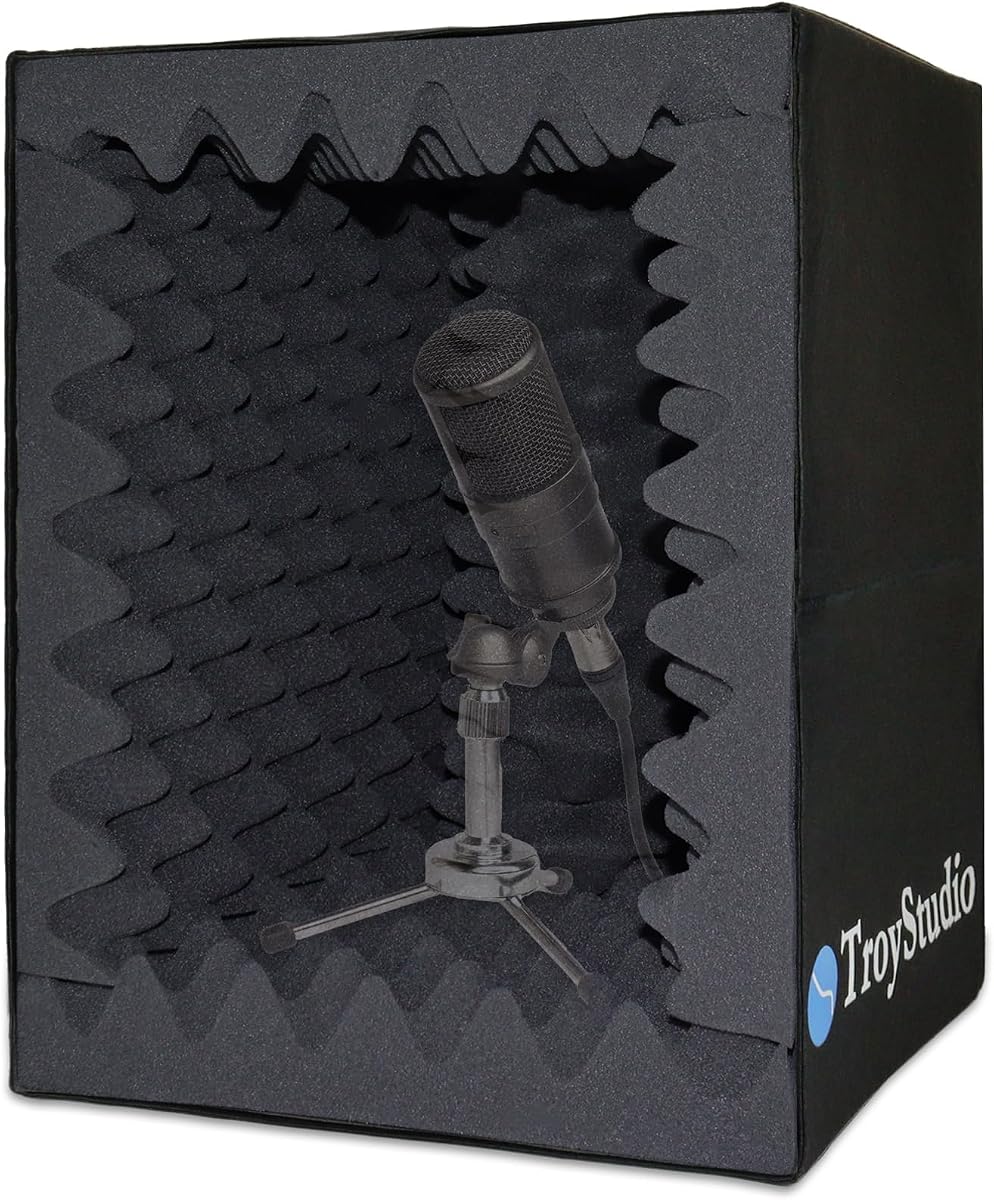
TroyStudio Portable Vocal Booth
4.3Editor score
Five dense foam panels
Rapid foldable setup
Desk and stand use
A sound booth for recording creates a more controlled environment for vocals, instruments, voice-over work, and spoken content. The best unit combines effective sound absorption, a stable structure, practical dimensions, and a setup that remains manageable in a home office, bedroom, or compact studio.
This guide compares ten portable recording booths and microphone isolation shields across design, interior space, acoustic materials, included accessories, portability, and recording versatility. It covers everything from compact foldable panels for desktop use to larger enclosed booths with stands, trays, lighting, and device mounts.
The rankings show how each product serves a different use case, from a lightweight budget solution to more substantial premium booths. Ratings and specifications reflect the supplied product information, while prices and availability can change, so readers should confirm current details before purchasing.
4.3Editor score

4.6Editor score

4.3Editor score
As an Amazon Associate we earn from qualifying purchases.
The comparison below places all ten recording booths side by side, emphasizing interior space, acoustic construction, portability, included equipment, and the most suitable recording environment for each design.

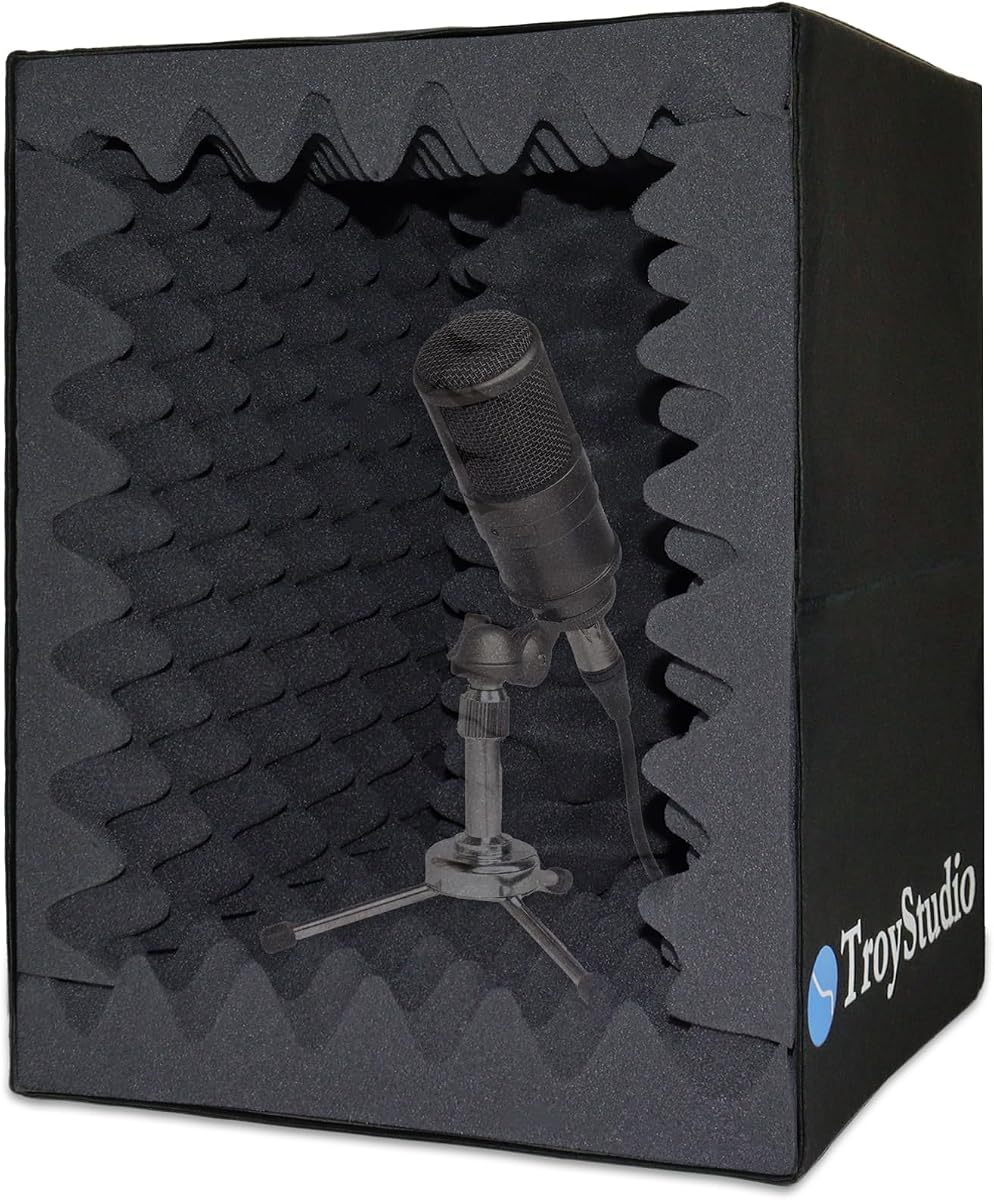


This TroyStudio portable vocal booth is the strongest budget-oriented option in the group, carrying a 4.3 rating. Its compact cube surrounds the microphone with five pieces of two-inch-thick dense egg-crate foam, creating a dedicated dry area for vocals and spoken recording without requiring a permanent studio installation.
We may earn a commission when you buy through this link, at no additional cost to you.
The strongest features are quick deployment, genuinely small packed dimensions, and flexible placement. It can sit on a desk or mount on a suitable microphone stand, while cable openings make it easier to route connected equipment. The supplied information states that setup takes about one minute and disassembly takes around twenty seconds, making it practical for creators who move between rooms.
The important limitation is scale. Its eight-by-ten-inch interior provides room for a microphone, but not a laptop, interface, tablet, or other large equipment. The mounting option also requires a stand with a diameter below 0.86 inches. Those constraints make it a focused isolation tool rather than a complete walk-in recording environment.
This booth is well suited to podcasters, voice actors, singers, audiobook narrators, and home-studio users who need an affordable way to reduce reflections around a microphone. For anyone who can work within a small footprint and values fast setup, it is a convincing recommendation.
The foldable construction makes this one of the most convenient choices for recording in different locations. Its light weight and quick assembly also make it easier to establish a consistent vocal position before each session.
Five dense foam pieces cover the internal surfaces, helping limit reflections and room reverb. The booth is particularly useful when the microphone is the only item that needs to fit inside the treated area.
We may earn a commission when you buy through this link, at no additional cost to you.
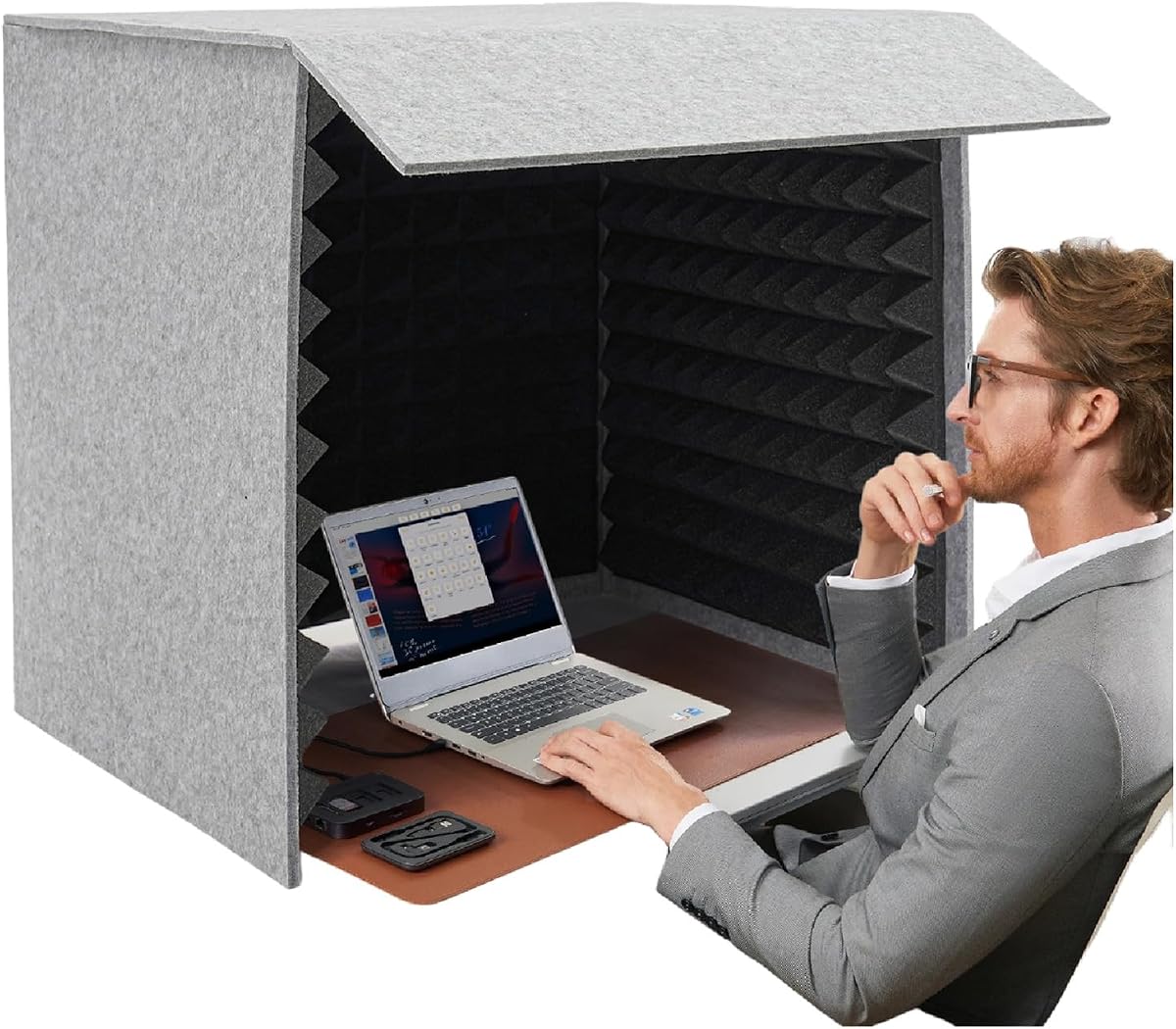
The foldable desktop soundproof cover provides a considerably larger recording area than a typical microphone shield, with a 23.62-inch interior in each dimension. The supplied information does not include a customer rating, so its performance assessment must focus on the documented design rather than a numeric review history.
We may earn a commission when you buy through this link, at no additional cost to you.
Its double-layer construction combines high-quality sound-absorbing sponge with dense polyester panels. A three-sided semi-enclosed layout offers space for a microphone and laptop while avoiding a rigid metal frame that could introduce unwanted resonance. The sturdy outer panel adds structure, while the 12.56-pound weight remains manageable for a product of this size.
Its greatest limitation is that it is not a fully sealed room. The open side makes access convenient for a performer, keyboard, laptop, or control surface, but some ambient sound can still enter. It should be understood as a desktop acoustic environment rather than an absolute soundproof barrier, and the lack of published rating warrants attention from buyers who depend heavily on customer feedback.
This model makes sense for home-studio users who need more elbow room than a folding shield but do not want to dedicate an entire room. It is also useful in game rooms and other spaces where a compact, semi-enclosed recording setup is more convenient than a permanent booth.
The interior is proportioned to hold both a microphone and a laptop, which makes it more practical for live monitoring or scripting than a tiny microphone-only shield. Users can position equipment more naturally rather than reaching around the booth.
Using a frame-free structure can help avoid metallic resonance. Absorbing and polyester layers instead direct attention toward controlling reflections within the enclosure.
We may earn a commission when you buy through this link, at no additional cost to you.
This portable vocal booth offers the most walk-in format in the guide, measuring 33 by 33 inches across the base and 79 inches tall. Its 3.5 rating indicates mixed customer feedback, but the supplied design details suggest a practical enclosure for creators who need to stand or move more freely than they can in a desktop shield.
We may earn a commission when you buy through this link, at no additional cost to you.
Thickened acoustic blankets are intended to reduce reverb, echo, and ambient noise. A snap-together frame, hook-and-loop straps, and easy-drape panels allow setup without tools. The kit also includes an adjustable phone or tablet mount and a storage shelf for a microphone, scripts, or cables, which supports an organized recording workflow.
Because it is a fabric-and-frame booth rather than a rigid acoustically sealed room, it should not be expected to block every sound completely. The 3.5 rating also makes it prudent to consider owner feedback before committing. Its larger structure, by contrast, is the main reason to choose it over a small folding shield when mobility and standing room are priorities.
It is best suited to podcasters, streamers, voice-over performers, and musicians working in dorms, apartments, home offices, or other compact environments. Choose it when the benefit of entering a dedicated booth and having device storage outweighs the need for a fully rigid enclosure.
The frame joins through snap-fit components, while hook-and-loop straps secure the blankets. This design reduces setup time and allows the booth to be broken down for transport or storage.
A phone or tablet holder and a dedicated shelf keep frequently used items close at hand. These features are especially useful for livestreaming, scripted voice work, and mobile podcast production.
We may earn a commission when you buy through this link, at no additional cost to you.
The Voctent Portable Vocal Booth is the strongest all-around recommendation, combining a 4.6 rating with a mobile 360-degree isolation design. It is built for vocalists, voice actors, podcasters, and rappers who want a controlled recording space that can move with them rather than remain fixed to a permanent room.
We may earn a commission when you buy through this link, at no additional cost to you.
Its blankets are described as twice as thick as competing designs and are filled with sound-absorbing cotton beneath dense fabric. The manufacturer states that the booth reduces reverb and noise by up to 87 percent. A carrying bag makes the unit practical for mobile creators, while the included interface tray, iPad mount, and LED lamp create a more complete workstation around the performer.
The enclosure is still a portable treatment product rather than a conventional soundproof room, and the accessory bundle makes it bulkier than a simple foldable shield. Buyers must balance the stronger enclosure and 360-degree coverage against the additional space required for the included equipment and the need to position themselves inside the booth.
This is the product to consider first for serious home vocal recording where room reflections, convenience, and workflow accessories all matter. The high rating, thick materials, complete accessory set, and portable format make it the most balanced option for creators who want a professional-style setup without converting an entire room.
The 360-degree layout surrounds the recording position instead of protecting only one microphone side. That makes it more appropriate for singers and voice performers whose sound can arrive from several directions during a take.
The interface tray, tablet mount, and LED lamp help organize a mobile recording station. These additions can reduce interruptions caused by misplaced notes, equipment, or poor lighting during recording.
We may earn a commission when you buy through this link, at no additional cost to you.
The XTUGA MIS02 combines a 4.3 rating with a versatile five-panel isolation design. It is particularly appealing to vocalists and podcasters who want to adjust the shape of their recording environment instead of working with a fixed cube or fully enclosed booth.
We may earn a commission when you buy through this link, at no additional cost to you.
Its architecture uses three layers, including triangular high-density sponge insulation on five reflectors. Four end panels fold, allowing users to choose a three-panel arrangement with two folded panels or a fuller five-panel arrangement. The arched design and adjustable angles help position the absorptive surfaces where reflections are most likely to affect a microphone.
Unlike a full booth, the shield leaves the performer and much of the microphone environment accessible. It also does not create a space for a laptop or interface, so it works best as a targeted treatment around the recording mic. Its effectiveness depends partly on placing it correctly and keeping its open side away from the strongest source of unwanted sound.
This product suits users who want better control than a small desktop screen and more flexibility than a large enclosed booth. It is particularly practical for home podcasting, vocal tracking, and voice-over sessions in which a musician or narrator needs quick, repeatable positioning.
Users can open the shield for a less enclosed setup or extend all four folding panels for broader reflection control. That flexibility makes it easy to adapt the same product to different room conditions.
The triangular reflectors combine a filter region with sound-absorbing material. This multi-layer approach is designed to reduce interference waves arriving from the sides and rear of the microphone.
We may earn a commission when you buy through this link, at no additional cost to you.
This larger TroyStudio booth provides a step up in interior capacity while preserving the portability and quick setup of the smaller model. It carries a 4.3 rating and uses the same five-piece, two-inch dense egg-crate foam approach, making it a logical choice for creators who need more microphone clearance.
We may earn a commission when you buy through this link, at no additional cost to you.
The interior measures 12 by 14 by 16 inches, while the folded package is 16 by 16 by 6 inches. At four pounds, it remains portable enough to move between a home office, bedroom, closet, or rehearsal area. Cable holes, table placement, and compatible stand mounting provide several ways to establish the product.
Although larger than the compact TroyStudio, it remains a microphone-centered booth rather than a room-sized workstation. Larger devices will not fit comfortably, and a stand with a diameter smaller than 0.86 inches is needed for the mounting configuration. The manufacturer's stated 92.7 percent reverb protection should also be understood within the context of the supplied product information rather than as a guarantee for every room.
The booth is best for vocalists, podcasters, audiobook readers, and home musicians who need a roomier dry area around the mic. It is a balanced recommendation for users who find the smallest model too confined but do not need the full walking space of an enclosed creator booth.
The wider and taller interior reduces the chance of a performer bumping the foam or crowding the microphone. It also gives users more freedom to position a large condenser microphone and its suspension mount.
A reinforced backing panel is intended to keep the enclosure from becoming flimsy. Elastic bands in the felt case can secure the foam more compactly for transport or storage.
We may earn a commission when you buy through this link, at no additional cost to you.
This microphone stand and isolation shield is a convenient one-package solution for creators who do not want to select a stand separately. Its 4.4 rating and extensive adjustment options make it a strong alternative to shields that only sit on a desktop.
We may earn a commission when you buy through this link, at no additional cost to you.
The 72.8-inch stand offers a stated height range of 42 to 71.5 inches, allowing seated or standing use. A weighted triple-leg base helps reduce tipping risk, and a steel clamp with a screw-locking mechanism secures the stand. The foldable shield has a 17.1-inch diameter and uses studio-grade acoustic foam backed by lightweight ABS plastic.
The shield's acoustic sandwich includes reflective, filter, and absorption layers, with the product information stating 26 dB of noise reduction and 87 percent ambient-noise blocking across two zones. This is a targeted microphone treatment rather than a room enclosure, and the absence of a microphone from the package means buyers need to confirm compatibility before placing one inside.
This product is a strong match for podcasters, voice actors, streamers, and performers who value height control and a stable full-size stand. It is particularly useful when the same recording position must be reproduced across multiple sessions, although users who need a private vocal booth should consider a more enclosed model.
The wide adjustment range supports both seated podcasting and standing vocal performance. The weighted base and locking clamp help maintain a consistent microphone position during longer takes.
Reflective, filtering, and absorptive layers work together around the front panel. This layered approach is intended to reduce reflections and interference without requiring a large enclosure.
We may earn a commission when you buy through this link, at no additional cost to you.
The VOCTENT Portable Recording Booth is the premium choice for creators who want walk-in isolation in a relatively compact footprint. It has a 4.3 rating, an internal height of six feet eight inches, and a 33-by-33-inch base, allowing a performer to stand and work inside rather than speak into a desktop screen.
We may earn a commission when you buy through this link, at no additional cost to you.
A gap-sealing closure draws the fabric walls snug to reduce openings through which background chatter and HVAC hum might enter. The dual-purpose blankets combine a polyester exterior, cotton fill, and non-woven liner. The black outside creates a professional appearance, while the white interior reflects light and makes scripts easier to read during filming or voice work.
The package includes a tablet or phone holder, an interface tray, and clamps for a mobile setup. It breaks down into a travel duffel, but the assembled height still requires more space than a tabletop shield. As with any fabric booth, the result depends on keeping closures aligned, avoiding unnecessary movement, and positioning the enclosure away from major direct sound sources.
This booth is best for serious singers, voice actors, podcasters, and small teams that need an enclosed mobile studio. It offers a stronger sense of separation and room control than a folding panel, making it worth the added bulk for users who regularly record vocals in apartments or busy homes.
A six-foot-eight internal height permits standing performances without requiring a room-scale structure. The narrow square footprint can fit more readily into a corner or dedicated studio area.
The white lining reflects available light into the recording area. This makes it easier to read a script, check a display, or work during a video-enabled session.
We may earn a commission when you buy through this link, at no additional cost to you.
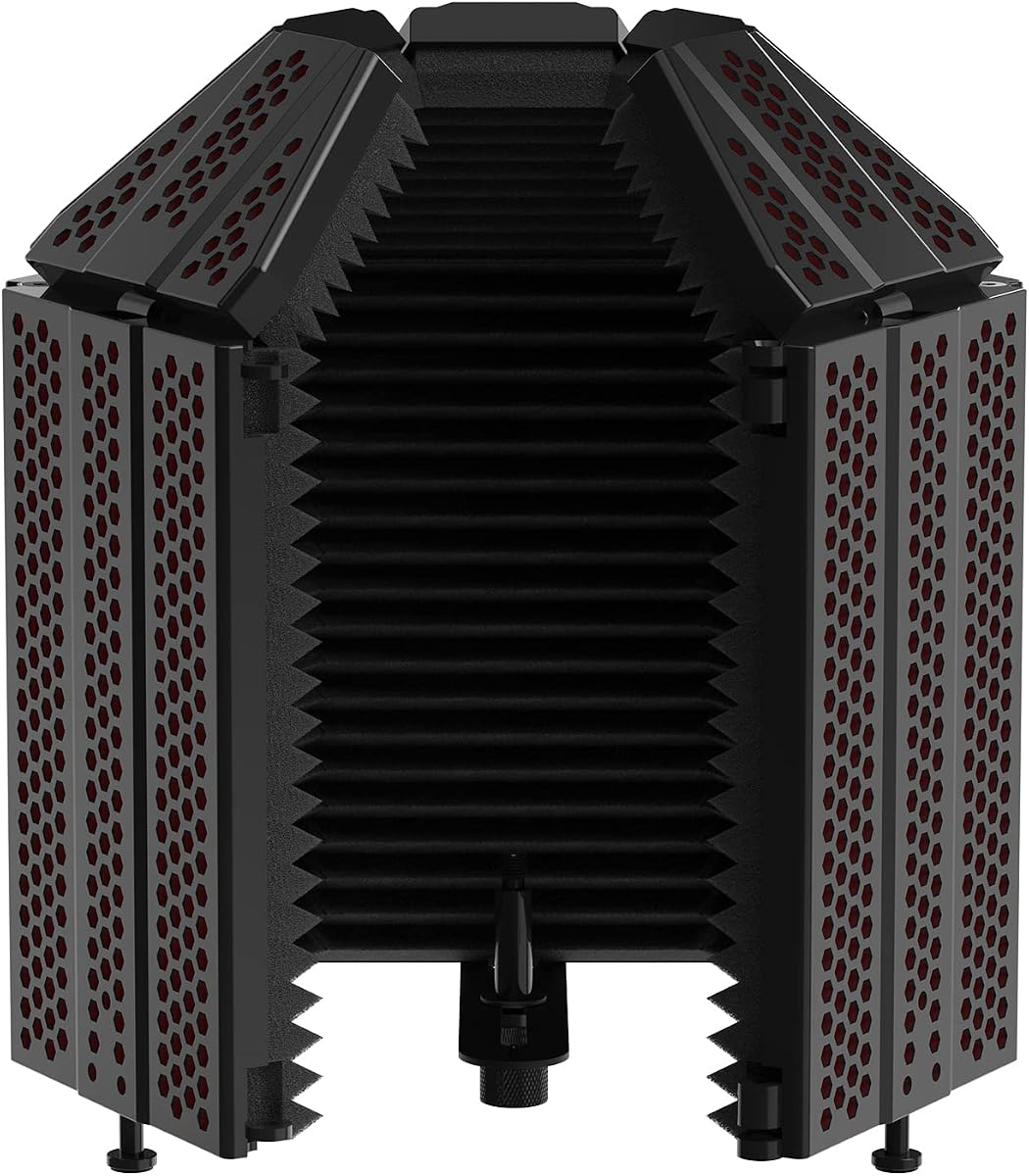
This six-sided low-stand isolation shield offers a compact way to surround a microphone with absorptive surfaces. Its 4.3 rating reflects a generally favorable customer response, and the six-panel configuration distinguishes it from simpler three-sided desktop screens.
We may earn a commission when you buy through this link, at no additional cost to you.
Each side can fold and adjust its angle, allowing the creator to place denser coverage where the room produces the strongest reflections. High-density acoustic foam lines the panels, while a metal frame adds support without making the product excessively heavy. The low-profile form keeps the setup relatively close to the desktop.
As with other open shields, it cannot isolate the performer from all background sound. The front remains accessible for performance and microphone placement, and the limited internal area means the booth is designed around the mic rather than a laptop or interface. Its advantage lies in targeted treatment and adjustability rather than complete environmental separation.
It is a useful choice for podcasting, gaming commentary, voice-over work, broadcasting, and home vocal recording. Buy it when desk space is limited but the ability to shape six sides around a microphone is more important than having an enclosed booth.
Additional panels can intercept reflections arriving from more directions. Adjustable angles let users concentrate coverage where a room's echo is most noticeable.
The panels collapse when a session ends, which is valuable in shared workspaces. The product remains close to desktop scale while offering more directional coverage than a single flat panel.
We may earn a commission when you buy through this link, at no additional cost to you.
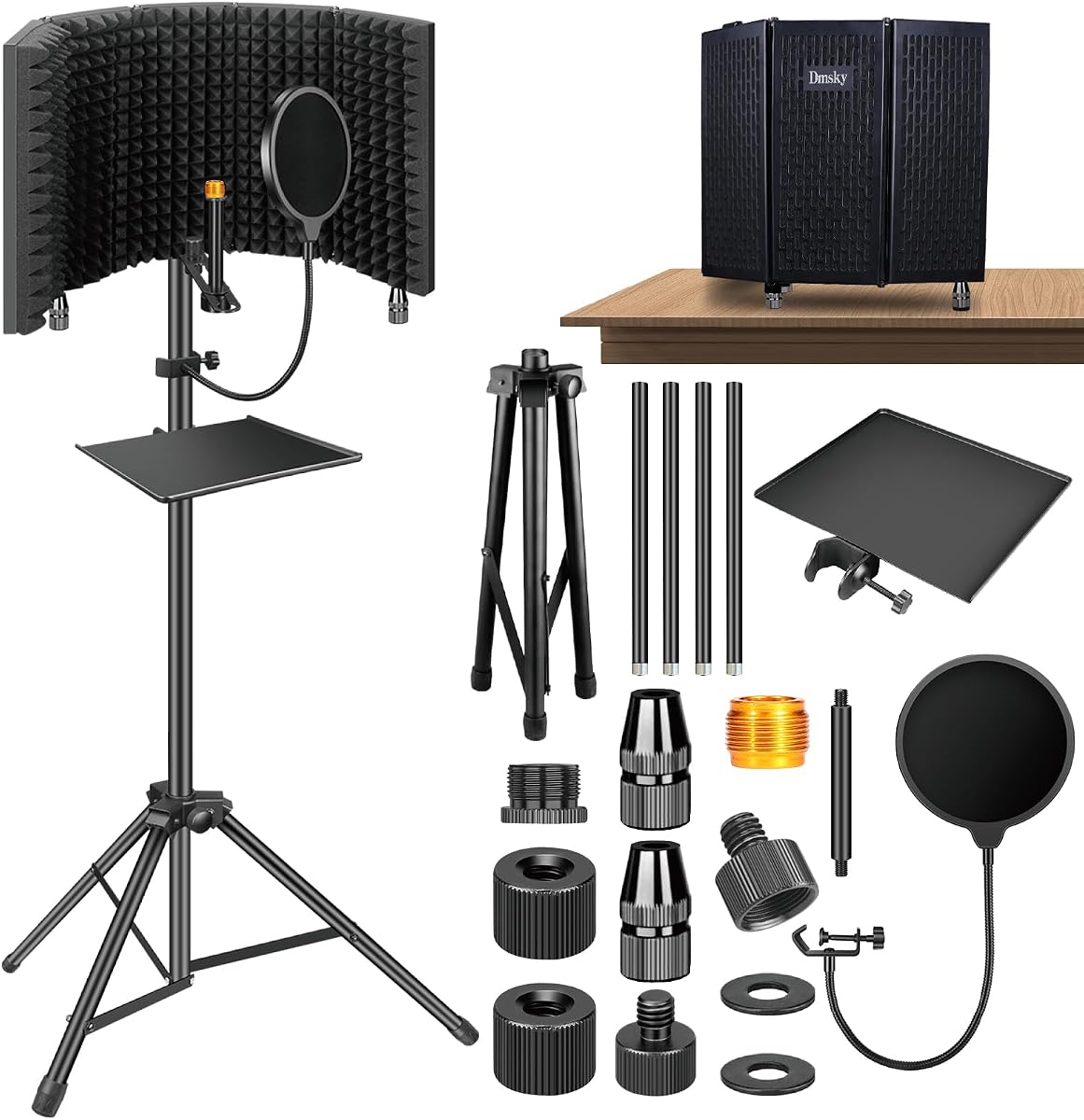
The Dmsky isolation shield pairs a 4.6 rating with a full-size stand, foldable shield, pop filter, adapters, and storage tray. It is one of the most complete packages for podcasters and performers who want to start with a coordinated recording setup rather than assemble separate accessories.
We may earn a commission when you buy through this link, at no additional cost to you.
Five folding panels use a triple construction that combines reflective, filter, and absorbing layers. Their angles can adjust up to 180 degrees, allowing the shield to be shaped around a microphone. The steel stand reaches 78.7 inches and has a 42-to-71.5-inch adjustment range, while a heavy-duty tripod is intended to reduce instability.
The package includes a pop filter, adapters for 3/8-inch and 5/8-inch fittings, and a storage tray for a phone, external sound card, or similar equipment. The product information notes that the upgraded stand tube may differ from the listing image, although both tubes are described as steel. Users should also account for the fairly large footprint of a full-height stand.
This product is well suited to broadcasting, singing, home studios, and seated or standing recording. It is an attractive recommendation for anyone prioritizing a complete accessory bundle, although those with limited floor space may prefer a low desktop shield.
The pop filter, universal adapters, and equipment tray cover common recording needs. This reduces the number of separate purchases required for a functional vocal setup.
The five panels can be unfolded and adjusted to follow the shape of the mic and room. That flexibility helps users concentrate treatment near the most reflective surfaces.
We may earn a commission when you buy through this link, at no additional cost to you.
The right recording booth depends on the room, performance, equipment, and degree of portability you need. Compare enclosure style, usable dimensions, acoustic materials, structural support, and accessories before choosing a format.
Open isolation shields are best for targeted microphone treatment in relatively controlled rooms. They are compact, inexpensive, and easy to reposition, but they cannot create the same boundary as an enclosed booth. Foldable cubes and three-sided desktop covers sit between these extremes, offering more reflection control while keeping the performer and nearby equipment accessible. Fully enclosed booths are more appropriate for noisy homes, apartments, and shared offices where background chatter and room reverb need stronger suppression.
Interior dimensions matter because a product can sound suitable in a listing yet be too small for a large condenser microphone, suspension mount, pop filter, or tablet. Microphone-only booths may have compact dimensions of roughly eight by ten inches, while desktop covers can provide a roughly 24-inch cube. Walk-in models need enough floor area and ceiling clearance for the performer to stand naturally. Always check whether the quoted measurements describe the usable interior, exterior, or folded package.
Dense acoustic foam, sound-absorbing sponge, polyester panels, and cotton-filled blankets each provide a different approach to controlling reflections. Layered products may combine reflection, filtering, and absorption to address sound arriving from several directions. A thicker liner can improve treatment, but overall performance also depends on proper placement, closure, and distance from the microphone. Sound-absorbing materials reduce reflections; they do not create the same result as a room with heavy structural isolation.
A closed enclosure can reduce unwanted sound more effectively, but an open side may be necessary for singing, speaking, reading, and operating equipment. Three-sided designs make it easier to place a laptop or tablet beside the microphone, while full booths allow the performer to step inside. Consider how you will read scripts, monitor takes, change cables, and maintain a natural performance. The most effective booth is one you can use consistently, not merely the most enclosed option.
Portable booths should be easy to assemble, disassemble, and store between sessions. Look for foldable panels, detachable frames, carrying bags, travel duffels, and manageable weight. Desktop shields with metal frames are especially convenient for shared workspaces, while larger fabric booths require more floor space and careful transport. A quick setup process is valuable if you record in different rooms, but portability should be balanced against stability and the amount of treatment included.
Some isolation shields include a stand, while others require one to be purchased separately. Mounting systems may accept 3/8-inch or 5/8-inch adapters, desktop bases, boom arms, or stands narrower than a specified diameter. Check the microphone mounting thread, the shield's connection point, and the clearance around the stand base. Larger condenser microphones may also need a separate shock mount or suspension mount, which should not be assumed to be included.
Booths bundled with an interface tray, device mount, storage shelf, pop filter, lamp, adapters, or carry bag can simplify setup. These accessories are most valuable when they solve a real workflow problem, such as holding a script, supporting a phone, or keeping an interface within reach. They do not improve the acoustic performance by themselves, so a simpler booth with stronger materials may be the better choice for a user who already owns accessories.
Customer ratings can reveal whether a product is easy to assemble, stable, and useful in real recording environments. A 4.6 rating is more informative than no rating, while a lower score can signal unresolved issues or simply more varied expectations. Read the supplied rating alongside dimensions, materials, and design. Products without published ratings require closer attention to the details of their construction, included parts, and return policies.
Begin by choosing a stable location away from obvious noise sources such as televisions, air conditioners, washing machines, busy hallways, and windows. Clear enough floor or desk space for the product, microphone, stand, and cables. Position the microphone near the center of the treated area, keep the performer or mouth at a consistent distance, and close gaps or folds as directed by the manufacturer.
Assemble the booth according to its instructions, taking care not to force panels, tighten screws beyond what is required, or obstruct ventilation. If the design includes an interface tray, device holder, pop filter, or lighting accessory, install these only after the main structure is stable. Check that the stand is locked, the microphone is supported, and cables can pass through openings without pulling against the frame.
For care, clean removable foam or fabric gently according to the product instructions and avoid harsh chemicals. Let every component dry fully before reassembly, and do not compress foam for long periods unless the design explicitly permits it. Fold or collapse the booth only when it is dry, inspect connectors and frame pieces regularly, and store the product in its case or recommended carrying bag to protect the acoustic materials.
Portable booths are most useful for controlling reflections and improving clarity around a microphone, but they are not equivalent to a structurally isolated room. They can greatly improve recordings in home spaces, especially when positioned carefully. They are less capable of eliminating low-frequency noise, heavy bass, and direct sound entering through open sides or gaps.
A microphone isolation shield is an open or partially open frame that places absorptive material around one microphone. A portable sound booth is larger and more enclosed, often allowing a performer to stand or sit inside with additional equipment. Shields are lighter and easier to position, while booths offer broader acoustic isolation and a more complete recording environment.
Place it in the quietest available area, ideally away from doors, windows, kitchen appliances, televisions, and shared walls that transmit noise. Keep the open side oriented away from the strongest background source when using a shield or desktop cover. Test the location by recording a short pass with the intended microphone, interface, gain settings, and performer position.
It depends on the model. Some products include a full stand, some are designed for a desktop surface, and others require a separate compatible stand. Check the package contents and mounting specifications. A microphone-only booth may also leave no room for a laptop, making a separate table or external control surface necessary.
They can help with instrument recording when the placement suits the instrument and the booth has enough interior space. Large acoustic guitars, drums, and other sizable instruments are generally better suited to larger room treatments or walk-in booths. Small percussion and compact microphones may work well with several of the medium-sized products in this guide.
Leave enough room to access the microphone, cables, controls, and ventilation without brushing against the panels. A full walk-in booth also needs enough clearance to enter and stand comfortably, while its fabric walls should be allowed to sit without being compressed. Desk-based shields can usually be placed closer to walls, but the open side should not face a major noise source.
It can make the recorded result sound clearer and drier by reducing reflections and reverberation. It does not change the microphone itself or correct poor placement, gain, room noise, or an unsuitable interface. Consistent positioning and testing remain important because even a well-built booth is only one part of a complete recording chain.
Follow the manufacturer's cleaning guidance and avoid soaking the fabric or using chemicals that may damage the outer shell or internal fill. Remove loose dust gently, allow the booth to dry fully after cleaning, and keep it in its case or travel bag when not in use. Periodically check frame locks, straps, and folded seams because gaps can reduce isolation.
The best choice depends on how much isolation your room needs and how much space you can devote to recording. The TroyStudio compact booth leads the budget category, the Voctent 360-degree model stands out as the best overall creator package, and the larger VOCTENT enclosure offers the most premium walk-in experience in the group.
For most home creators, prioritize useful interior dimensions, substantial acoustic material, stable mounting, and a setup you will actually use. Compact shields are best for targeted vocal treatment, desktop covers add room for a laptop, and walk-in booths are worth considering when household noise is the central problem. Accessories help workflow, but they should not outweigh the quality of the core enclosure.
Ratings, product specifications, availability, and prices can change over time, especially as sellers update listings. Review the current product page, package contents, dimensions, and customer feedback before purchasing so the chosen booth still matches your recording space and workflow.