
DJI RS 3 Mini
4.3Editor score
Compact 795-gram design
Third-generation stabilization
Bluetooth shutter control
Native vertical shooting
Compare the best gimbal for Sony A7III options for stability, payload, tracking, controls, portability, vertical shooting, and accessories.
A gimbal designed for the Sony A7III can transform handheld walk-and-talk footage into smoother, more polished video while giving creators greater freedom of movement. The right model should comfortably balance the camera and lens combination, provide stable operation, offer useful controls, and remain practical for the way you shoot.
This guide compares ten camera and smartphone stabilizers using their stated payload capacities, motors, control systems, tracking features, battery information, mounting options, and included accessories. It covers compact travel gimbals, larger models for heavier rigs, kits for solo creators, and one smartphone-focused option that is not suitable for a Sony A7III.
Each review explains who the model is best suited to, where it offers a meaningful advantage, and what compromises to consider. Ratings reflect the supplied customer feedback, while specifications and compatibility details are based on the listed product information. Product listings, bundles, and availability can change over time.
4.3Editor score

4.5Editor score

4.2Editor score
The table below compares payload, portability, control features, tracking, and vertical-shooting capabilities, with special attention to the practical needs of a Sony A7III creator.


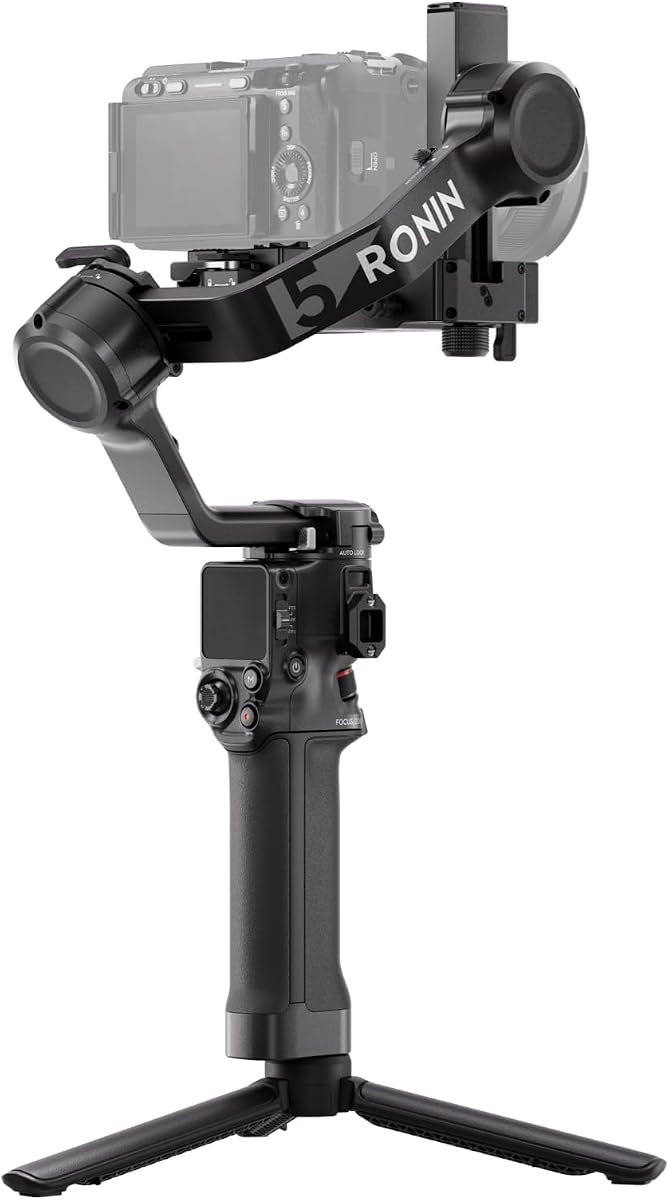


The DJI RS 3 Mini combines a compact 795-gram body with a two-kilogram tested payload, making it one of the most practical choices for a Sony A7III when portability matters. Its supplied rating is 4.3, and the product information highlights a third-generation RS stabilization algorithm, Bluetooth shutter control, native vertical shooting, and a 1.4-inch full-color touchscreen.
We may earn a commission when you buy through this link, at no additional cost to you.
The most attractive quality is the balance between size and carrying capacity. A Sony A7III with a moderately compact lens can sit within the stated payload, while the low 795-gram body weight makes long handheld sessions less tiring than a full-size stabilizer. Bluetooth shutter control adds convenience after the initial camera pairing, and the touchscreen makes common settings accessible without navigating every function through physical buttons.
Its limitations deserve equal attention. The RS 3 Mini does not include the intelligent tracking hardware found in some newer or larger models, so creators who need automatic subject framing may need an additional module. The supplied listing also notes that the DJI Ronin app has been removed from Google Play and directs users to the official DJI website for the latest application and firmware.
This is the strongest general recommendation for a Sony A7III creator who wants a capable travel gimbal without a large rig. It is particularly attractive for vloggers, documentary shooters, and location crews who value compactness. Those who require advanced automated tracking should look at the DJI RS 4 Mini or a model with integrated tracking, while anyone who wants a simpler buying decision can favor the higher-rated RS 4 Mini.
At 795 grams, the RS 3 Mini reduces the burden of carrying a full-frame mirrorless camera throughout a day. Its compact form is useful on walks, in crowded environments, and during shoots where a larger stabilizer would be inconvenient.
Bluetooth shutter control allows the gimbal to trigger photo capture and video recording after the camera is paired. Native vertical shooting is straightforward because the quick-release plate can move to the vertical arm without dismantling the gimbal.
We may earn a commission when you buy through this link, at no additional cost to you.
The DJI RS 4 Mini earns a supplied rating of 4.5 and stands out as the most well-rounded compact gimbal in this list. It retains a two-kilogram payload and broad camera compatibility while adding automatic axis locks, intelligent tracking, responsive follow modes, and a fast vertical-switching process suited to a Sony A7III.
We may earn a commission when you buy through this link, at no additional cost to you.
Automatic axis locks reduce setup time by handling the physical locking of the gimbal's axes. The intelligent tracking module can keep a subject framed during orbit shots and solo filming, while Responsive Follow Mode reacts quickly to hand movements. These features add meaningful value for creators who routinely work alone or move around active subjects.
The product is not entirely frictionless. Intelligent tracking depends on the separate tracking module, and setup still requires proper balancing and careful attention to camera position. As with other listed DJI gimbals, the supplied information says the Ronin app has been removed from Google Play and should be obtained through the official DJI website.
For a Sony A7III user, the RS 4 Mini is a particularly persuasive travel companion because it offers useful tracking without moving to a much larger class of gimbal. It suits solo filmmakers, travel storytellers, and vloggers who want quick deployment and flexible framing. The higher supplied rating and included tracking module also give it an edge over the standard RS 3 Mini for feature-conscious creators.
The intelligent tracking module helps maintain framing around a person, vehicle, or other chosen subject. This reduces the need for a second operator during orbit shots, walkarounds, and common social-media sequences.
Automatic axis locks streamline storage and deployment, while the stated ten-second vertical change supports rapid transitions between widescreen and social-first framing.
We may earn a commission when you buy through this link, at no additional cost to you.
This renewed DJI RS 3 Mini has the highest supplied rating in the group at 4.7 while retaining the core specifications of the standard model. It weighs 795 grams, supports a two-kilogram tested payload, and uses a third-generation RS stabilization algorithm for Sony and other compatible mirrorless cameras.
We may earn a commission when you buy through this link, at no additional cost to you.
Its compact size makes it easier to carry than a full-size gimbal, while the stated payload provides enough capacity for many Sony A7III configurations when a reasonably compact zoom or prime is used. Bluetooth shutter control simplifies recording and still-image capture, and native vertical shooting makes it practical for short-form content without rotating the camera into an improvised position.
Renewed status is the key issue for cautious buyers. The supplied information does not describe the cosmetic or functional condition of an individual unit, so purchasers should review the listing details and available condition information carefully. The product also lacks the intelligent tracking module highlighted for the DJI RS 4 Mini.
This listing is most suitable for a buyer who values the familiar RS 3 Mini platform and its strong customer feedback but is comfortable with a renewed unit. It offers a lightweight way to stabilize a Sony A7III for travel, interviews, and everyday video. For buyers who want the most predictable presentation, the new RS 3 Mini or RS 4 Mini may be easier to compare.
The renewed model preserves the RS 3 Mini's useful combination of low body weight, a two-kilogram tested capacity, touchscreen operation, and third-generation stabilization. That makes it a capable daily tool rather than a barebones stabilizer.
Moving the quick-release plate to the vertical arm enables native vertical operation, a useful feature for creators publishing short-form clips as well as conventional widescreen video.
We may earn a commission when you buy through this link, at no additional cost to you.
The ZHIYUN CINEPEER Weebill 3E combines a 1.05-kilogram body weight with a three-kilogram tested payload, giving Sony A7III creators more capacity than most compact alternatives. Its supplied rating is 4.4, and its most distinctive practical advantages include native vertical shooting, an optional sling mode, and a stated maximum battery life of up to 16 hours.
We may earn a commission when you buy through this link, at no additional cost to you.
The larger payload gives the user more freedom to add accessories or choose a larger lens combination, subject to staying within the tested limit and maintaining balance. The wide-axis arm is listed as compatible with major mirrorless cameras and lenses such as the FE 24-105mm F4G. The optional 2.5 sling mode is intended to reduce fatigue while preserving low-angle stability, although its grip and wrist rest require separate purchase.
There is an important accessory caveat. The stated package includes the Panasonic control cable, while Canon, Sony, and other camera brands need a compatible additional control cable for wired camera control. That extra requirement can make setup less convenient than it appears in the headline feature list.
The Weebill 3E is a strong recommendation for a Sony A7III creator who wants more payload and battery headroom than a miniature gimbal offers. It suits longer workdays and rigs that may require additional equipment. Buyers should account for the compatible Sony cable and decide whether the optional sling grip will improve their particular shooting style.
A three-kilogram tested payload offers useful headroom for a Sony A7III setup, particularly when accessories or a larger zoom are involved. Balance remains essential even when the total weight is below the stated maximum.
The stated battery life of up to 16 hours and two-hour, 46-minute charging time target extended production days. The optional sling grip can further reduce fatigue when working with low angles.
We may earn a commission when you buy through this link, at no additional cost to you.
The DJI RS 3 Mini Mic Combo combines the compact RS 3 Mini with two Mic Mini transmitters, one receiver, and a charging case. It is a convenient choice for a Sony A7III creator who needs stabilized video and portable wireless audio in a single coordinated package, with a supplied rating of 4.3.
We may earn a commission when you buy through this link, at no additional cost to you.
The gimbal retains the RS 3 Mini's 795-gram weight, two-kilogram tested capacity, native vertical shooting, third-generation stabilization, Bluetooth shutter control, and 1.4-inch color touchscreen. The two transmitters make it possible to capture audio from more than one participant, while the receiver carries that audio back to the camera setup. Listed microphone features include 48kHz recording, two-level noise cancellation, automatic limiting, and up to 400 meters of transmission range.
The trade-off is simply that the bundle is broader than a gimbal-only purchase. A creator who already owns compatible wireless microphones may not need the included audio equipment, while someone producing interviews or travel documentaries may find the coordinated package more useful than sourcing every component separately.
This is the pick for a Sony A7III user who values a compact camera package and regularly records conversations. It avoids the need to assemble a separate audio solution around the stabilizer. However, those who only need smooth camera movement can concentrate on the standard RS 3 Mini, and creators wanting automated tracking should compare the DJI RS 4 Mini.
Two transmitters let the operator capture wireless audio from two participants at once. The receiver, charging case, and compact transmitters make the system easier to deploy for interviews and travel conversations.
Combining the gimbal and microphone components in one bundle can simplify kit planning. It is especially practical for creators building a mobile interview or documentary setup around a Sony A7III.
We may earn a commission when you buy through this link, at no additional cost to you.
The FeiyuTech SCORP 3 KIT is the most feature-packed bundle in the guide, combining a 3.5-kilogram payload with integrated AI tracking, a detachable touchscreen handle, a 39-foot remote, and a broad collection of creator accessories. Its supplied rating is 4.2, and its modular design is particularly interesting for Sony A7III users who want room to grow.
We may earn a commission when you buy through this link, at no additional cost to you.
The detachable handle allows the gimbal to be monitored and controlled from up to 39 feet away, which is useful when a solo creator needs to place the camera farther away. Integrated hardware-level AI tracking is advertised without requiring an app download or Bluetooth pairing for the tracking function. The extended arms, repositionable slider, and quick-release plate make camera positioning more adaptable than on a simpler compact model.
The package is not necessarily the simplest choice. It includes a carrying box, carbon-fiber extension pole, weight-reducing shoulder strap, articulating arm, and fill light, so buyers should consider whether every accessory serves their workflow. Its 4.2 rating is also the lowest among the camera-focused gimbals listed, which makes the feature set and build proposition especially important.
The SCORP 3 KIT is best for solo creators building a mobile production system around a Sony A7III. It provides a compelling mix of payload, tracking, remote control, and included accessories. Those who prioritize minimal weight should consider the RS 4 Mini, but filmmakers who want an adaptable kit in one box will find the modular approach here particularly compelling.
The detachable handle doubles as a wireless remote with a touchscreen, allowing framing, mode changes, and camera adjustments from a distance. This can reduce the need for a second camera operator during repeatable shots.
The integrated AI tracking module is advertised as operating at the hardware level without an app download or Bluetooth pairing for tracking. That simplifies the process of starting an autonomous sequence.
Extended axis arms, a repositionable slider, and a modular vertical arrangement allow more creative camera placement. The one-second vertical switch is particularly useful when switching between widescreen and social formats.
We may earn a commission when you buy through this link, at no additional cost to you.
The DJI RS 5 is a more sophisticated full-size option for Sony A7III creators who value precise setup, tracking, and low-angle control. Its supplied rating is 4.3, and the listed features include enhanced intelligent tracking, second-generation automated axis locks, fine-tuning knobs on each axis arm, and a new Z-axis indicator.
We may earn a commission when you buy through this link, at no additional cost to you.
The Z-axis indicator gives immediate visual feedback about camera tilt, helping the operator return to level while walking or repositioning. Teflon interlayers and axis-specific adjustment controls support more precise balancing, while automated locks streamline storage and deployment. The electronic briefcase handle enables single-handed operation through its joystick and buttons, which can be valuable for low-angle shots.
This model is aimed at a creator who wants more adjustability than a compact gimbal can offer. The supplied package includes the RS 5, quick-open tripod, BG33 battery grip, and other accessories. Users should also note that the Ronin app is not available through Google Play according to the supplied information and must be obtained from the official DJI website.
For a Sony A7III, the RS 5 is a strong option when filming demands precise balance, responsive controls, or advanced subject tracking. It is less compelling for someone whose priority is the smallest possible travel bag. Between those extremes, it provides a well-rounded professional feature set for location work, corporate production, and polished solo content.
Fine-tuning knobs on each axis arm make small corrections easier when working with a particular Sony A7III and lens combination. Teflon interlayers are designed to support smoother movement during those adjustments.
The enhanced tracking module can frame people, vehicles, or pets, while the electronic briefcase handle provides joystick and button access during low-angle work without requiring a separate control surface.
We may earn a commission when you buy through this link, at no additional cost to you.
The DJI RS 4 is a full-size, three-kilogram-capable gimbal that combines a 4.5 supplied rating with several professional workflow features. It is a logical option for Sony A7III users who need more payload than a mini model, native vertical operation, multiple movement modes, and an extensible control ecosystem.
We may earn a commission when you buy through this link, at no additional cost to you.
The second-generation native vertical design lets the camera be moved into vertical orientation without separate accessories. Users can switch among PF, PTF, and FPV modes through the gimbal's mode control, and FPV can be configured for 3D Roll 360 or a custom mode. The extended tilt axis adds 8.5 millimeters of balancing space compared with the prior generation, which is helpful when fine-tuning a full-frame camera.
The RSA communication port opens the door to compatible control and remote-control accessories, while the separately sold BG70 grip can extend runtime from the listed 12 hours to 29.5 hours and provide accessory power through USB-C. The included BG21 grip, quick-release plate, and extended grip/tripod make the base package useful for solo creation, although it is less compact than the RS 3 Mini family.
The RS 4 is best for Sony A7III creators who want professional flexibility without moving to the most specialized full-size workflow. Its balance of payload, modes, vertical operation, and accessory support makes it especially suitable for commercial production and experienced filmmakers. Travelers who need minimum weight should instead consider the RS 4 Mini.
PF, PTF, and FPV settings allow the operator to choose how the gimbal follows movement. The FPV option adds more dynamic framing, including 3D Roll 360 or custom behavior.
The RSA communication port supports compatible control accessories. The optional BG70 high-capacity grip can substantially increase runtime and power compatible camera accessories through its USB-C connection.
We may earn a commission when you buy through this link, at no additional cost to you.
The FeiyuTech SCORP 2 offers a 2.5-kilogram payload, integrated AI tracking, and a 1.3-inch touchscreen in a camera-focused design. Its supplied rating is 4.4, and the built-in tracking module is the feature that most distinguishes it from stabilizers that require separate tracking hardware.
We may earn a commission when you buy through this link, at no additional cost to you.
An OK gesture can initiate subject tracking, while additional gestures control photography and video functions. The upgraded L-shaped mounting plates and anti-off quick-release slider allow quick vertical placement without extra equipment. A multifunction control knob can rotate individual axes or operate electronic zoom, and the touchscreen presents filming status and parameter settings in a compact display.
Camera control can be wired or wireless through Bluetooth, allowing the shutter button to trigger focus or recording. The Feiyu SCORP app unlocks deeper settings such as parameter adjustment and phone gravity-sensor remote control. Buyers should therefore account for the app when they need advanced behavior, even though basic tracking is integrated.
For a Sony A7III creator, the SCORP 2 is a compelling middle ground between compact travel gimbals and larger modular systems. It offers more payload than two-kilogram models and built-in tracking without requiring a separate module. It is especially useful for solo creators who want gesture-based operation and rapid transitions between horizontal and vertical formats.
The integrated tracking sensor allows a subject to be selected with an OK gesture, while other gestures manage photo and video actions. This keeps solo operation centered on the gimbal rather than a separate tracking device.
The new L-shaped plate and anti-off slider simplify moving the camera into the vertical arm. That makes the SCORP 2 useful for creators alternating between landscape footage and short-form vertical video.
We may earn a commission when you buy through this link, at no additional cost to you.
The hohem iSteady X3 is a capable three-axis smartphone gimbal, but it is not compatible with the Sony A7III. It accepts iPhone and Android devices rather than mirrorless cameras, making it relevant only as an alternative for creators filming with a phone. Its supplied rating is 4.2.
We may earn a commission when you buy through this link, at no additional cost to you.
Its feature set is impressive for mobile video. Upgraded iSteady 8.0 stabilization is designed to smooth walking and running footage, while a removable controller permits operation from up to 32.8 feet away. The Hohem Joy app provides AI tracking and gesture control, and the unit folds down for easier travel.
The package also supports multiple shooting arrangements. A tripod and extension rod create low-angle pet shots, overhead views, and stationary setups, while the magnetic fill light offers adjustable brightness and tones for indoor or night content. Quick portrait and landscape switching makes it convenient for short-form publishing.
Although the iSteady X3 earns a place as a phone-focused option, it should not be considered in a Sony A7III shortlist as a camera stabilizer. A Sony A7III user needs a model explicitly designed for mirrorless cameras and a suitable payload. The X3 is best considered separately as an inexpensive mobile-production tool for creators who sometimes leave their full-frame camera at home.
The detachable controller lets a solo creator start recording, select tracking, or change settings from a distance. It turns the phone stabilizer into a compact tool for unattended and wide-framing shots.
The folding body, extension rod, tripod mode, magnetic fill light, and landscape-to-portrait switching cover many common needs for short-form mobile video in one compact accessory.
We may earn a commission when you buy through this link, at no additional cost to you.
The best gimbal for a Sony A7III is not determined by payload alone. Portability, tracking, camera control, battery life, balance adjustability, and the size of the shooting rig all influence how a stabilizer feels in practical use.
Begin with the combined weight of the camera, mounted lens, battery, quick-release plate, and any cage, monitor, microphone, or other accessory. A Sony A7III body itself is only part of the calculation, and adding a zoom can change the total significantly. Choose a gimbal whose tested or maximum payload exceeds the complete rig with comfortable margin rather than matching the rig almost exactly.
For a straightforward full-frame setup, the two-kilogram models may be sufficient. The Weebill 3E, DJI RS 4, and FeiyuTech SCORP 3 offer three to 3.5 kilograms of stated capacity, making them more flexible when accessories or larger lenses are involved.
Payload capacity only tells you whether a gimbal can carry the rig; proper axis balance determines how smoothly it can perform. Mount the camera on the correct plate, tighten the mechanism, and adjust each axis until the camera neither drifts upward nor pulls downward on its own. A balanced camera feels controlled rather than like it is fighting the motors.
Look for fine adjustment hardware and enough tilt-axis travel to accommodate the camera's center of gravity. The DJI RS 5 offers axis-specific fine-tuning knobs and Teflon interlayers, while the DJI RS 4 has an extended tilt axis. Either feature can make repeated setup easier.
A compact gimbal is easier to carry, quicker to deploy, and less tiring over a full day. The DJI RS 3 Mini weighs 795 grams, making it a strong travel option for a Sony A7III. Larger models usually provide more payload or advanced control features but require a larger travel bag and more deliberate setup.
Choose based on your shooting environment. Walking tours, crowded events, and travel days favor a mini model. Studio work, heavier accessories, and full production days may justify the stability and controls of a larger gimbal.
Tracking can make solo production much easier by keeping a person, vehicle, or pet framed while you move. Consider whether the tracking hardware is integrated or sold separately. The FeiyuTech SCORP 2 and SCORP 3 include integrated tracking modules, while the DJI RS 4 Mini uses the RS Intelligent Tracking Module.
Tracking is not the same as every stabilization mode. It helps maintain subject framing, but you still need a well-balanced camera and clear movement. Use the appropriate following mode for orbiting, walking, or more dynamic sequences.
Vertical video is essential for many short-form platforms, and a gimbal can make switching formats much cleaner than rotating the camera inside the mount. Native vertical designs move the camera and plate into a supported position rather than relying on a tilted, improvised arrangement. The DJI RS 3 Mini, RS 4 Mini, Weebill 3E, SCORP 2, and SCORP 3 all advertise native or rapid vertical configurations.
Check how the transition works as well as whether vertical mode exists. The DJI RS 4 Mini lists a ten-second vertical switch, the SCORP 3 describes a one-second modular rotation, and the RS 4 uses a second-generation horizontal plate. These details affect workflow on shoots where multiple formats are needed.
Physical buttons, joysticks, touchscreens, and wireless camera control can determine how quickly you can change settings during a take. Bluetooth shutter control is listed for the DJI RS 3 Mini and Weebill 3E, while the SCORP 2 supports both wired and wireless control. The DJI RS 5 adds a joystick and buttons to its electronic briefcase handle.
Compatibility is important. A gimbal may stabilize a camera without controlling it, and a wireless function may require the right adapter, cable, or camera setting. The Weebill 3E specifically includes a Panasonic control cable and requires an additional compatible cable for Sony, Canon, and other brands.
Battery expectations depend on the product, screen use, motors, tracking, and connected accessories. The Weebill 3E lists up to 16 hours of maximum battery life, a strong figure for long workdays. The DJI RS 5 lists up to 14 hours of standby time, while the RS 4 lists 12 hours with the included grip and supports a separately sold battery grip that extends runtime.
Look for charging speed and the ability to power accessories as well. A long runtime is valuable for location work, but you should still begin a day with a fully charged battery and carry a backup plan for extended shoots.
Some advanced functions depend on a companion app, and software availability can affect the ownership experience. The supplied DJI listings note that the Ronin app has been removed from Google Play and direct users to the official DJI website for the latest version and manual. FeiyuTech's SCORP 2 also uses its own app for advanced parameter and gravity-sensor controls.
Review what is actually in the box. Some models include a tripod, grip, plate, or control cable, while other useful items are sold separately. The SCORP 3 KIT provides the broadest accessory collection, whereas the Weebill 3E's sling grip and wrist rest are optional additions.
Charge the gimbal and camera batteries before the shoot, install the appropriate firmware, and confirm that the camera model and lens combination remain within the stabilizer's stated capacity. Balance the completed rig carefully on every axis. Start with the camera and lens secured on the quick-release plate, then adjust roll, pitch, and yaw until the camera remains neutrally positioned when the stabilizer is powered.
Choose a follow mode that matches the intended movement. Use a smooth mode for walk-and-talk footage, a responsive mode for faster orbiting or directional changes, and an FPV-style mode only when the camera is intended to move dramatically with the operator. For tracked sequences, establish the subject clearly, keep movements moderate, and avoid making abrupt changes that could leave the framing behind.
Operate the gimbal with relaxed hands and smooth foot placement. Keep the camera lens protected, avoid leaving the rig in rain or direct heat, and clean the motors and mounting hardware with a soft, dry cloth. Before packing it away, power down the gimbal, lock its axes, remove the camera if space is tight, and store batteries separately according to their instructions.
A gimbal may support the Sony A7III body and many lenses, but the complete rig must remain within the stated payload. Lens weight and dimensions also affect balance and clearance. Check the manufacturer's supported camera list and confirm that the lens and mounted accessories can be balanced on every axis.
For many A7III setups, a two-kilogram tested payload is sufficient when using a compact prime or moderate zoom without many accessories. The body, lens, battery, plate, and any accessories all count toward the total. Larger zooms or accessories may call for a model with a three-kilogram or higher capacity.
Stabilization smooths movement by controlling the camera's position mechanically. Subject tracking is an automated function that recognizes and follows a selected person, vehicle, pet, or other target. A gimbal can provide excellent stabilization without automatic tracking, so these features should be evaluated separately.
Most camera-focused options in this guide advertise native or rapid vertical shooting, including the DJI RS 3 Mini, RS 4 Mini, RS 4, Weebill 3E, SCORP 2, and SCORP 3. The exact transition process varies, so check whether the camera must be repositioned on the plate or whether the entire mounting slider rotates.
No. The hohem iSteady X3 is designed for iPhone and Android devices and cannot hold or balance a Sony A7III. It remains a useful mobile gimbal with tracking, a remote, a fill light, and a foldable design, but it does not satisfy the requirements of a mirrorless-camera workflow.
It depends on the gimbal and the functions you want. The Weebill 3E listing specifically includes a Panasonic control cable and notes that Sony and other brands require an additional compatible cable for camera control. Other models use Bluetooth or specified adapters, so verify the required connection before purchasing.
A balanced rig requires less motor correction, which can produce smoother movement and reduce strain on the motors. Correct horizontal, vertical, and rotational balance also helps the camera remain level and makes the gimbal easier to control during sudden direction changes.
The supplied product listings state that the DJI Ronin app has been removed from Google Play because of a platform compatibility issue. They direct users to the official DJI website for the latest app version, user manual, and wireless firmware updates. Confirm the current software instructions before relying on app-based features.
The DJI RS 4 Mini is the strongest all-around recommendation for most Sony A7III creators because it combines a compact format, a two-kilogram payload, intelligent tracking, fast setup, and a 4.5 supplied rating. The DJI RS 3 Mini remains an excellent simpler option for travel, while the FeiyuTech SCORP 3 KIT stands out for its detachable remote handle, integrated tracking, larger payload, and extensive accessory collection.
Prioritize the complete rig rather than the camera body alone. Match the gimbal's payload to the body, lens, and accessories, then confirm that it balances cleanly. Tracking matters for solo work, native vertical operation matters for short-form content, and a low-angle handle or sling grip can make a major difference during demanding shoots.
Before making a final selection, check the current listing, included components, control-cable requirements, and app availability. Product bundles and availability can change, so confirm that the version being purchased includes the features that matter to your particular Sony A7III setup.